
Genetics of GAND
Understanding the genetic basis of GATAD2B-associated neurodevelopmental disorder.
GAND (GATAD2B-associated neurodevelopmental disorder), also known as GATAD2B syndrome, is a rare genetic condition characterized by developmental delay and intellectual disability.
The disorder occurs when one of the two copies of the GATAD2B gene does not function properly.
This may be caused by:
a change (variant) in the gene, or
the loss (deletion) of one copy of the gene.
In some cases, the deletion may be part of a larger chromosomal change affecting surrounding genetic material.
What causes GAND?
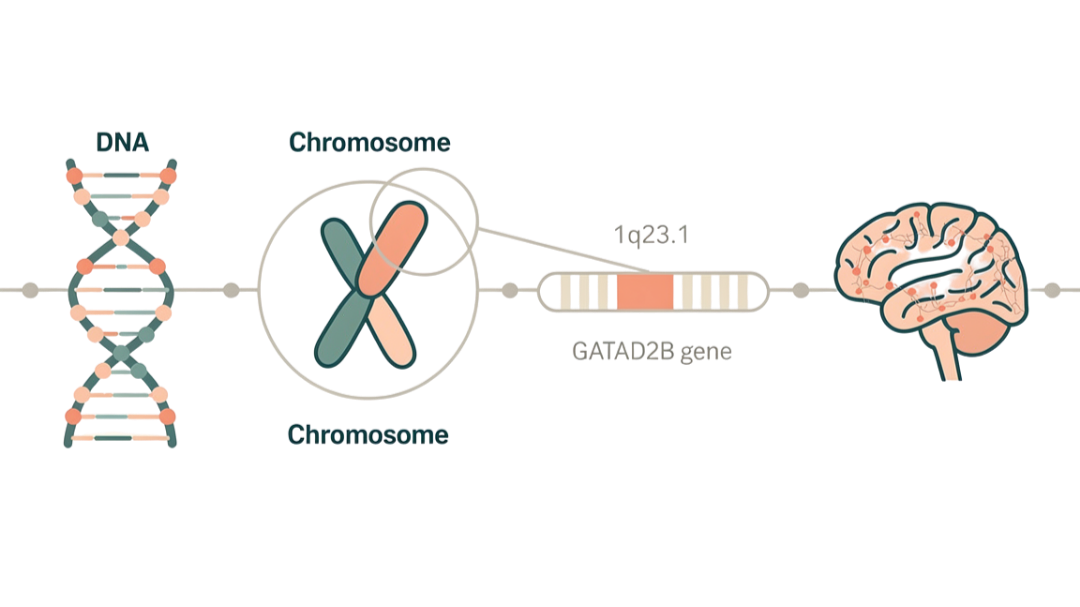
What are genes and chromosomes?
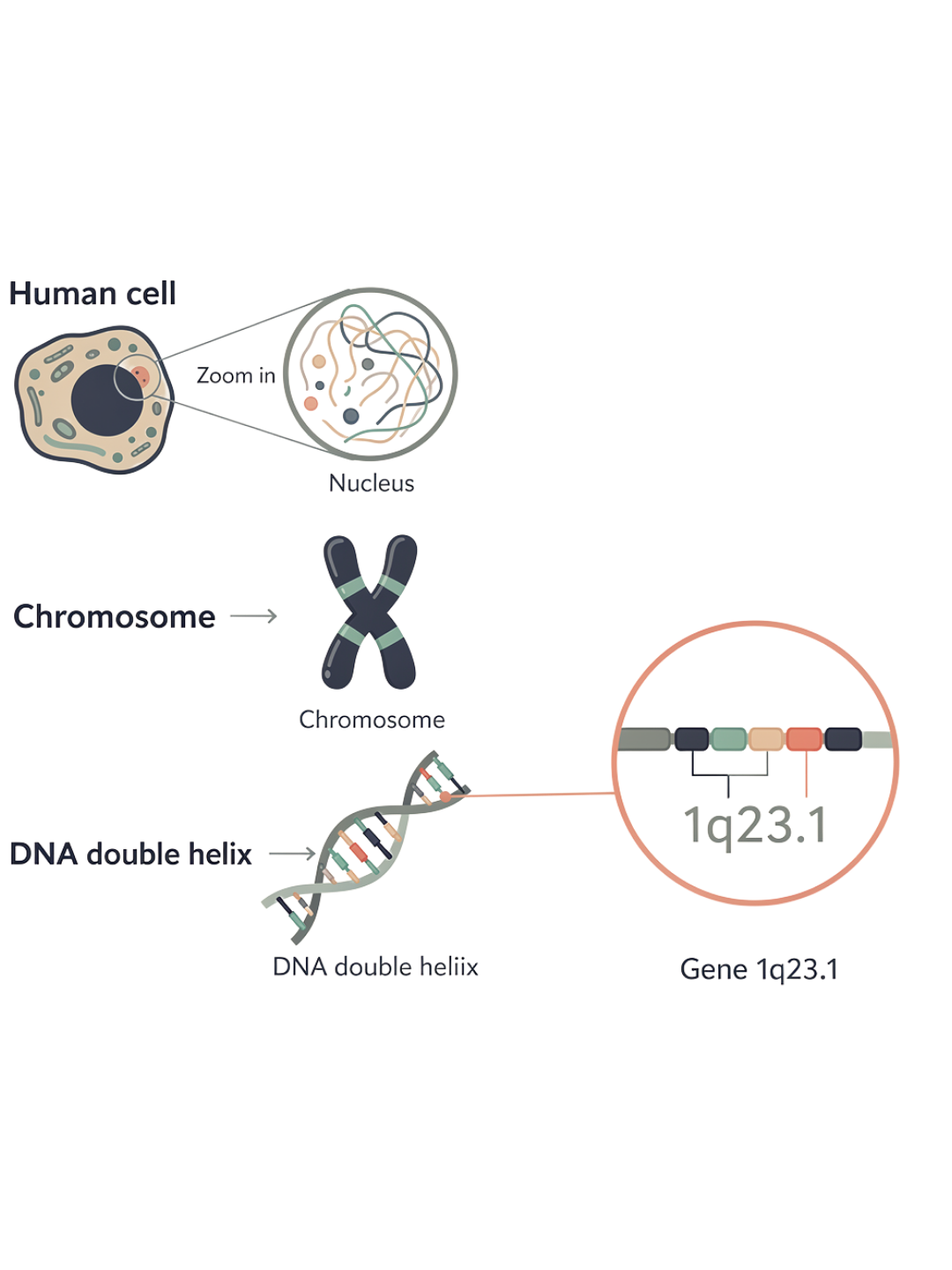
Genes are instructions made of DNA that guide growth and development.
These genes are organized into structures called chromosomes, which contain our genetic information.
Chromosomes are located inside our cells — the fundamental building blocks of the body.
The GATAD2B gene is located on chromosome 1, in a region known as 1q23.1.
Why is the GATAD2B gene important?
The GATAD2B gene plays an essential role in brain development and maturation.
When one copy of this gene does not function as expected, brain development is affected.
This is why GAND is primarily associated with:
developmental delay
intellectual disability